Suez IWS
Frontend modernization of Pléco at Suez IWS: migrating a legacy Liferay UI to Angular micro frontends, full design overhaul, and security hardening on a mission-critical enterprise B2B platform
Full-Stack Development on Pléco: SUEZ IWS Enterprise Extranet
SUEZ IWS (Industrial Waste Specialties) is a specialist in hazardous waste recycling and valorization, serving companies, local authorities, industrial sites, and waste management service providers. Originally developed by Ippon Technologies, Pléco is SUEZ IWS's enterprise B2B extranet digitizing the full lifecycle of hazardous waste management. As a Full-Stack Developer via Ippon Technologies since March 2026, I contribute to the ongoing development and maintenance of the platform.
Pléco: A Mission-Critical B2B Platform
Pléco is a multilingual (FR/EN/IT) extranet centralizing previously paper-based and fragmented processes into a unified digital workflow. Used by industrial clients across France, it provides:
- Document dematerialization: Digital FID/FIDA management (waste identification and acceptance forms)
- Trackdéchets integration: BSD/BSDA tracking via France’s national digital waste traceability system
- Invoicing & deliveries: Consolidated access to invoices, credits, and site reception records
- Asbestos loading plans: Geographic optimization of vehicle loading with PDF export and real-time tracking
- ADR label generation: Custom hazard labels from UN codes with CMR and environmental pictograms
- Appointment scheduling: Centralized waste removal scheduling with slot selection and charter mode
Frontend Modernization: From Liferay UI to Angular Micro Frontends
A key ongoing initiative is the progressive modernization of Pléco's frontend. The platform previously relied on Liferay's built-in UI layer, tightly coupled and hard to evolve. The team is incrementally migrating toward an Angular-based micro frontend architecture, decoupling UI modules from the Liferay backend to enable independent evolution of each feature area. This is a long-term effort requiring careful, phased execution alongside ongoing feature delivery.
This architectural direction mirrors the broader industry shift away from monolithic portals toward composable, maintainable front-end systems.
CI/CD Pipeline Rebuild
Alongside the frontend and backend work, I am rebuilding the CI/CD pipeline from the ground up to re-establish proper industrialization of the continuous integration process. This includes restoring automated test execution, structuring independent build and deployment cycles per micro frontend module, and making the pipeline reliable enough to support ongoing feature delivery without regressions.
Design Overhaul & Security Hardening
The modernization extends beyond architecture: a complete design system overhaul improves UX consistency across the platform's multilingual interface (FR/EN/IT). In parallel, security improvements address authentication flows, access control, and data exposure surface, critical requirements for a platform handling regulated hazardous waste data for industrial clients.
References
Related experience

Related articles
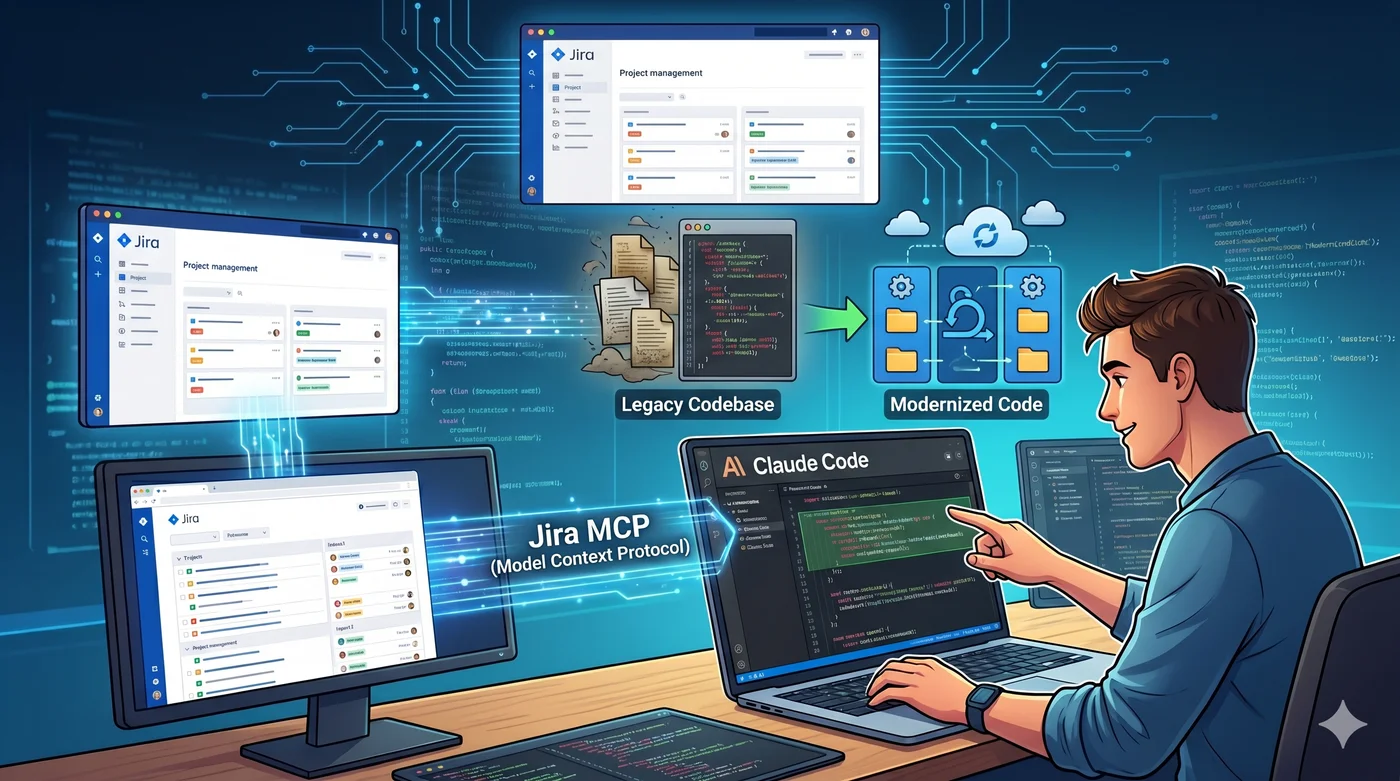
How I Use Claude Code and Jira MCP to Modernize Legacy Codebases
How I connect Claude Code to Jira via MCP to go from ticket to pull request on legacy Java codebases: my exact setup, CLAUDE.md config, and real-world results.
AI Broke Our Production Code. Here's the Craftsmanship Rule That Would Have Prevented It
An AI agent silently broke a 10-year-old business rule on a legacy Java codebase. No test caught it. It surfaced in production. Here's what that taught me about Software Craftsmanship, and why these principles matter more than ever when AI is writing your code.